The Personal Finance Pyramid: What Actually Matters
A simple way to think about personal finance. What actually matters, in what order, and why getting the foundations right usually matters more than optimising the details.
Most personal finance advice feels overwhelming because everything feels urgent.
When you think everything matters at once, it’s hard to know where to start.
- Should you overpay your mortgage or invest?
- Should you switch credit cards?
- Are you missing out by not doing X?
Over time, I’ve found it more useful to think about personal finance as a pyramid, where some things matter far more than others, and where order matters more than optimisation.
The idea in one sentence
Financial progress usually comes from fixing the weakest part first, not being distracted by the sexy stuff.
Here’s the simple version of the pyramid.
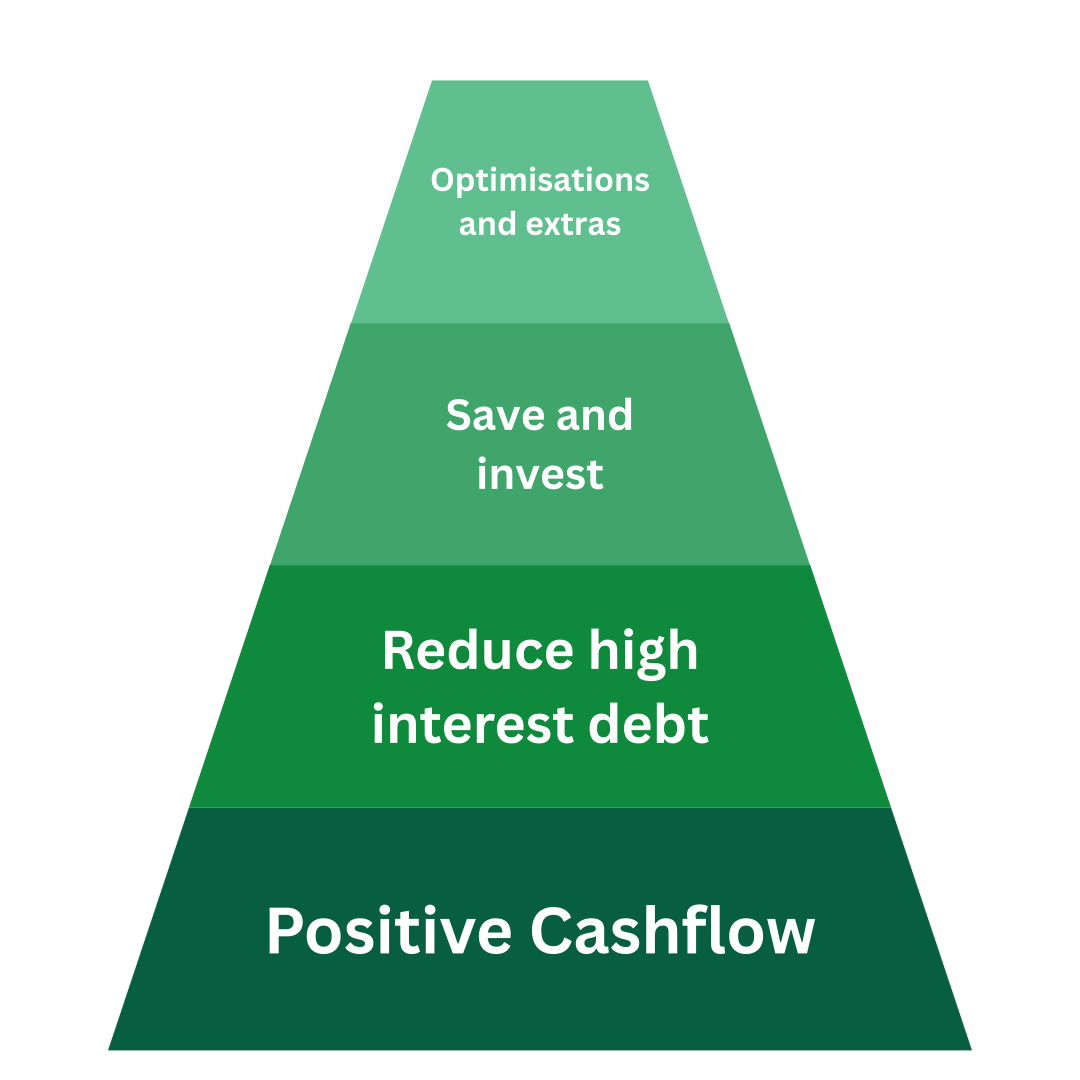
1. Positive cashflow
You consistently spend less than you earn.
This is the foundation everything else sits on.
If you regularly spend more than you earn, no amount of clever tactics will make things feel stable. Savings get chipped away, debt creeps up, and every unexpected cost feels stressful.
Signs you need to focus here
- You seem to run out of money towards the end of the month
- When your car broke down, you couldn't afford to fix it or had to take out debt
- Your credit card balance is increasing every month
Signs you've got this level solved
- You don't worry about how you're going to pay that bill
- You have some money left over at the end of the month
- You're doing fine, but you want to be doing great
Positive cashflow doesn’t necessarily mean being frugal or cutting out everything you enjoy. It means:
- Knowing roughly where your money is going
- Having some margin at the end of the month
- Not relying on future fixes to make today work
If this layer isn’t solid, it’s usually the most valuable place to focus.
Working on higher levels while spending more than you earn often makes things feel worse, not better.
2. Reduce high‑interest debt
Costly debt is shrinking, not growing.
High-interest debt works against you quietly.
It grows when you’re not looking and makes normal months feel tighter than they should.
Signs you need to focus here
- You have a credit card that you don't pay in full every month
- You don't know how much debt you have (because you can't face checking the balance)
- You don't know what the APR is on your credit card/loan
Signs you've got this level solved
- You know exactly how much interest you're paying & when it'll be paid off
- You know how much debt you have
- Your level of debt is decreasing every month
This isn’t about judging how the debt got there. It’s about recognising that:
- Interest creates friction
- Reducing that friction frees up cashflow
- Making progress here often feels better (and is less risky) than chasing higher returns
Even small, consistent reductions can noticeably reduce stress and increase options.
3. Save and invest
You’re building buffers now and options later.
Once cashflow is positive and high‑interest debt is under control, saving and investing start to do their real job.
Signs you need to focus here
- You have money in an account, but you don't know if it could be doing better
- You have life/financial goals that you want to achieve
- You have some money left over after every month that you don't know what to do with
Signs you've got this level solved
- You know your net worth
- You know when you can retire or stop working as much
Savings provide short‑term resilience, the ability to handle surprises without panic.
Investing gives you freedom later, not just bigger numbers.
These two belong together. Both are about creating space and security (either now or for the future), not maximising performance.
4. Optimisations and extras
Tweaks, tools, and nice‑to‑haves.
This is where most financial content lives:
- account optimisation (e.g. ISA vs SIPP)
- reward strategies
- tax edge cases
- timing decisions
These things can help, but only once the lower layers are stable.
Starting here often feels productive, but usually doesn’t fix the real problem. When the foundations are solid, these optimisations become genuinely useful instead of distracting.
What this pyramid leaves out (on purpose)
This isn’t a complete map of every financial topic. It’s a prioritisation tool.
Some important things cut across every layer:
- Risk protection (buffers, insurance)
- Behaviour (what you actually do, not what you know)
- Alignment (especially when managing money with someone else)
The pyramid works best when decisions are visible, intentional, and shared.
Why order matters more than tactics
Many people don’t struggle with money because they lack knowledge.
They struggle because they’re applying effort in the wrong place, polishing the top while the base is still shaky.
Getting the order right often reduces stress more effectively than learning something new.
A final thought
This way of thinking about personal finance isn’t about perfection or optimisation.
It’s about focusing on what has the biggest impact first, and letting the rest follow naturally.
If you’re unsure where to start, look for the lowest layer that feels unstable and start there.